Moving can be a daunting task, but with the right approach, it doesn’t have to be a stressful experience. One of the most important aspects of a successful move is proper packing, and that starts with choosing the right moving boxes. In this article, we will cover the smart way to pack and how to use moving boxes to your advantage.
The first step in packing is to gather all the necessary materials. You will need moving boxes of various sizes, packing tape, packing paper, bubble wrap, packing peanuts, and permanent markers. It’s also a good idea to have a few extra boxes on hand, just in case.
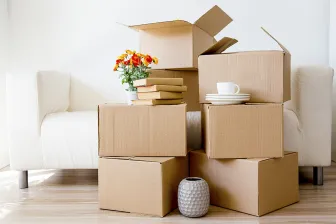
When choosing moving boxes, it is important to consider the size and weight of your belongings. Large, heavy items such as appliances and furniture will require larger, stronger boxes, while smaller, lighter items can be packed in smaller boxes. It’s also important to consider the fragility of your belongings. Delicate items such as dishes, glassware, and antiques will require extra padding and protection, so choose boxes with reinforced bottoms and consider using packing materials such as bubble wrap and packing peanuts.
Another important factor to consider is the number of boxes you will need. A good rule of thumb is to have at least 10-15 small boxes, 10-15 medium boxes, and 5-10 large boxes for a one-bedroom apartment. For larger homes, you may need more boxes. It’s also a good idea to have a few extra boxes on hand, just in case.
When it comes to the actual boxes, there are several options to choose from. The most popular types of moving boxes are corrugated cardboard boxes, which are strong, durable, and widely available. They come in a variety of sizes and can be used for a variety of items. Another option is plastic moving boxes, which are more durable and resistant to moisture and pests than cardboard boxes. However, they can be more expensive.
Once you have your boxes and packing materials, it’s time to start packing. The key to packing boxes properly is to use good packing techniques and to pack them as full as possible. This will prevent items from shifting during transport and provide extra protection for your belongings.
Start by packing the heaviest items in small boxes and the lighter items in larger boxes. This will help to distribute the weight of the boxes and make them easier to move. When packing fragile items, such as dishes and glassware, use plenty of packing materials, such as bubble wrap and packing peanuts, to protect them from damage.
As you pack, be sure to label each box with its contents and the room it belongs in. This will make unpacking much easier, and you’ll know where each box needs to go when you arrive at your new home. Consider using different colored labels or markers for different rooms, or use a labeling system such as “Kitchen” “Bedroom” “Bathroom” etc.
Another important aspect of packing boxes is to keep similar items together. This will make it easier to find what you need when you’re unpacking and will save you time and energy. For example, pack all of your kitchen items together, all your bathroom items together, and so on.
When it comes to packing clothes, consider using wardrobe boxes. These boxes allow you to hang clothes directly in the box, saving you the time and hassle of folding and packing them separately. This is particularly useful for clothes that are prone to wrinkle, such as suits and dresses.
In addition to the traditional moving boxes, there are also specialized boxes available for specific items. For example, there are dish packs, which are specially designed to protect dishes and glassware during the move.


